Unpacking Pinterest’s IPO expectations
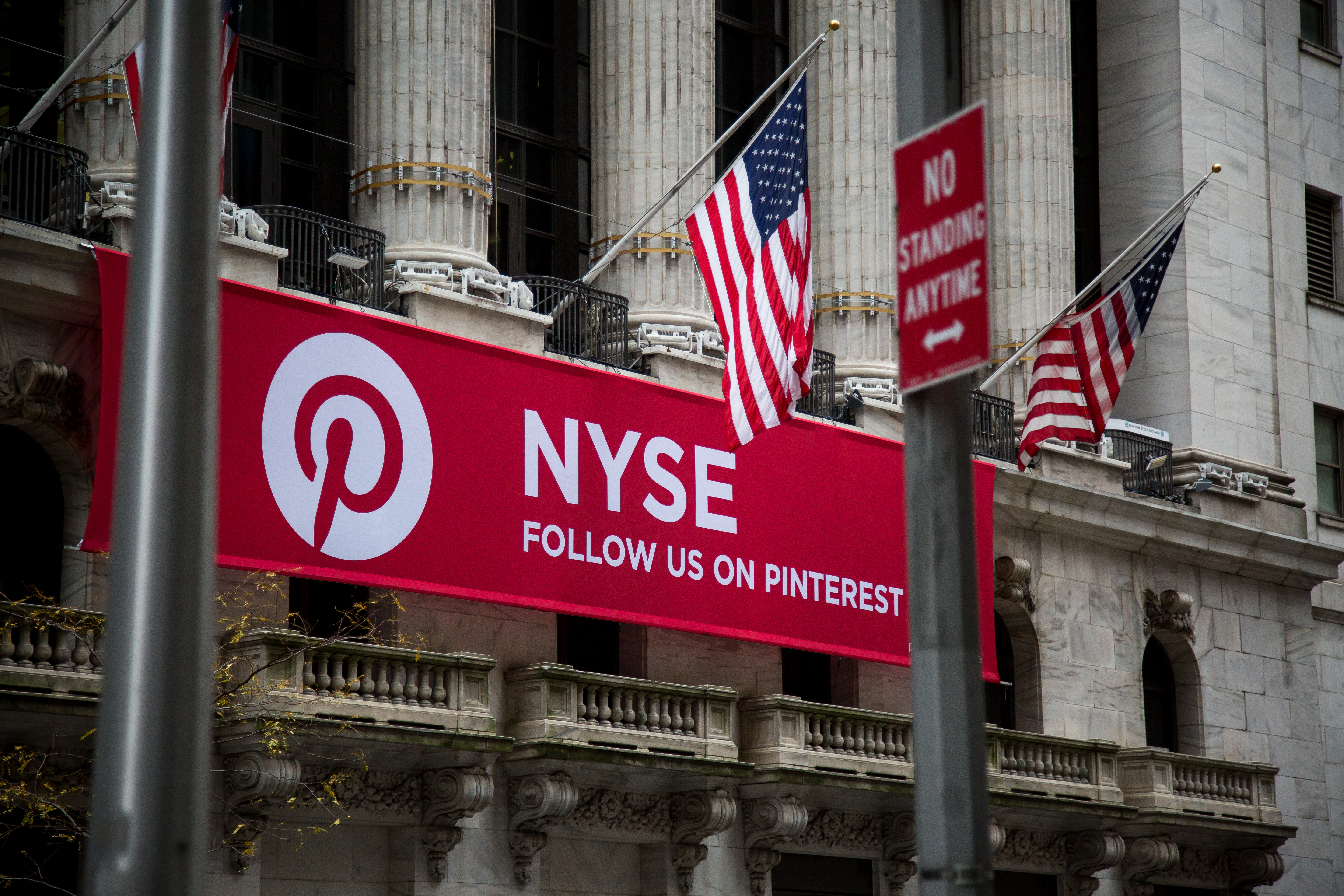
Now, as the company takes its final step toward its Thursday NYSE initial public offering, it’s being called an “undercorn.”
Pinterest plans to sell shares of its stock, titled “PINS,” at $15 to $17 apiece, less than the roughly $21 per share it charged private market investors to participate in its mid-2017 Series H, its last private financing. That IPO price translates into a mid-range valuation of $10.64 billion, or nearly $2 billion under the $12.3 billion valuation it garnered after its last round, hence “undercorn.”
There are many potential causes to a down round like this. In the case of Pinterest, it’s probably less a result of newly public Lyft’s poor performance on the stock market and more a result of its own reputation for slow growth. Pinterest is a disciplined company that’s carved a clear path to profitability. It has invested a lot of time and energy into building a positive, diverse culture and a product devoid of trolls and hate speech — time some believe should have been spent focused on rapid growth and scale.
Sure, if Pinterest had tossed its values aside and blitzscaled, maybe it would debut with a larger initial market cap, but its corporate culture will be key to its long-term value, and investors are going to get rich off its IPO either way. So Pinterest is an undercorn — who cares?
Pinterest isn’t too nice
Founded in 2010, Pinterest is one of the youngest members of the newly dubbed “A-PLUS” cohort of unicorns, made up of Airbnb, Pinterest, Lyft, Uber and Slack. Compared to its peers, Pinterest has raised a modest $1.47 billion in equity funding from Bessemer Venture Partners, which holds a 13.1 percent pre-IPO stake, FirstMark Capital (9.8 percent), Andreessen Horowitz (9.6 percent), Fidelity Investments (7.1 percent) and Valiant Capital Partners (6 percent), according to the company’s IPO filing.
Today, Pinterest counts more than 250 million monthly active users, despite a company culture that many have said has slowed progress. Co-founder and chief executive officer Ben Silbermann, as The New York Times pointed out in a recent profile, is not your typical unicorn CEO. He has refused to adopt the move fast and break things mentality, shied away from the press and focused on “quality growth” and a supportive company culture.
Even with Pinterest’s new status as an undercorn, Bessemer still owns a stake worth upwards of $1 billion. At a midpoint price, FirstMark and a16z’s shares will be worth about $700 million each. Pinterest employees may be too nice to make decisions as quick as other unicorns, as is the claim in CNBC’s recent piece on the company, but the company wouldn’t be where it is today if it completely lacked a “strategic direction.”
“Being nice and having core values and making decisions with intent is to their overall benefit,” Eric Kim, the co-founder of consumer tech investment firm Goodwater Capital, told TechCrunch. “They’ve done an amazing job at being very disciplined with a focus on top lines.”
منبع : techcrunch.com
نظرات
ارسال یک نظر